


Connected home
Lighting and shading sit at the intersection of technology and how a space actually feels. Get them right and a room shifts effortlessly between morning, afternoon and evening, between task and atmosphere, between a weekday and a dinner party. Get them wrong and even expensive architecture looks flat.
What a properly integrated system delivers:
- Lighting and shading working together — blinds adjusting as the sun moves, scenes balancing natural and artificial light automatically
- Every room connected to the same control layer as security, audio and climate so one action can change the whole home
- Scenes that run without being triggered — time-based, sensor-based or tied to arrival and departure
Lighting is the room. Everything else is furniture.

Lighting design
Smart lighting control is only as good as the lighting design underneath it. The number of circuits, the position of fixtures, the layering of ambient, task and accent light — these decisions happen before any controller is specified. We work alongside the lighting designer or take that role ourselves to make sure the infrastructure supports what the scenes need to do.
The foundations we get right:
- Circuit design that gives each zone genuine flexibility — not just on/off but full dimming range across every fixture
- Fixture specification reviewed for dimmer compatibility so the system performs as intended after installation
- Lighting layers — ambient, task, accent — considered per room so scenes have something meaningful to work with
You can't software your way out of a bad lighting layout.


Scene control
Scenes are the reason lighting control matters. A scene sets every relevant circuit in a room to a specific level with one action — creating an atmosphere rather than just adjusting brightness. The difference between a home with scenes and one without them is felt immediately, and it’s difficult to explain until you’ve lived with it.
How scenes work across the home:
- A small set of named scenes per room covering the real moments: morning, task, relax, entertain, wind down
- Whole-home scenes — Arrive, Goodnight, Away — that set every room simultaneously without room-by-room adjustment
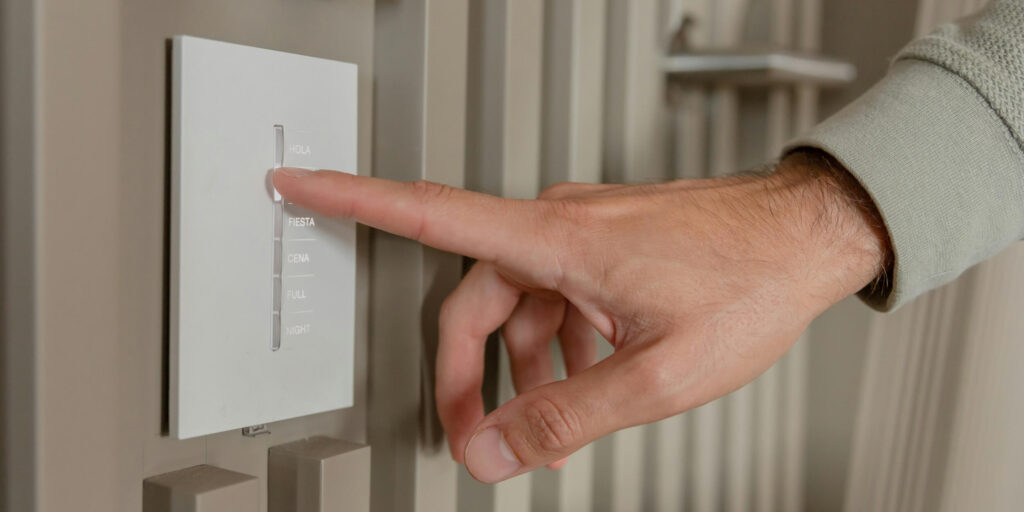
- Keypads placed where you actually reach for control, with scenes labelled so anyone in the household can use them without a tutorial
One tap. The room is exactly right.


Shading & blinds
Motorised shading is one of the least visible and most impactful elements of a smart home. Blinds that respond to the sun’s position reduce glare and heat load without manual adjustment. Shading tied into the lighting system means the balance between natural and artificial light shifts automatically through the day, in every room.
In a well-designed shading system:
- Motorised blinds and curtains integrated into the same control layer as lighting — adjusted by scene, time or sensor
- Sun tracking that moves shades as the sun crosses the facade, protecting interiors from direct glare without blocking the view
- Privacy and blackout modes built into scenes — Goodnight closes everything, morning opens gradually
The best shading is the kind you forget is motorised.


Outdoor lighting
Outdoor lighting has two jobs — security and atmosphere — and they require different approaches. Perimeter and pathway lighting needs to be reliable, triggered correctly and integrated with the security system. Entertainment and landscape lighting needs to respond to scenes, shift with time of day and contribute to how the outdoor space actually feels at night.
For the full property, that means:
- Perimeter and driveway lighting that responds to arrival, motion and security events — integrated with the gate and alarm system
- Entertainment area and pool lighting that shifts between functional and atmospheric with one scene change
- Garden and landscape lighting on timers and scenes so the property looks considered after dark without manual switching
The garden at night should look as intentional as the interior.


How a Space Atelier lighting and shading project works.
Every system is designed around your home, your habits and your plans — then installed and supported by the same team throughout. We don't quote from a catalogue.

Client Interview & Technology Education
We start by understanding how you use each space — morning routines, entertaining, working from home, winding down. Lighting is personal. The scenes are built around your patterns.

Initial Design Study
Circuit layout, scene structure, keypad positions, shading zones — mapped to your home before any product is specified. We work alongside or in place of your lighting designer.

Design Engineering & Construction Drawings
Full technical documentation — circuit schedules, dimmer specs, motor wiring, rack layout. Coordinated with your electrician so infrastructure goes in at the right stage.

Client Services & Support
After handover we stay close. Scenes get refined, new rooms get added, preferences change with the seasons. We're reachable and we know your system.
Smart Network Planning FAQ for High-End Homes
Traditional dimmers adjust a single circuit manually. Smart lighting control manages every circuit in every room from a single system — setting specific levels per circuit with one action, creating scenes that combine multiple circuits simultaneously, and automating those scenes based on time, occupancy or home state. The result is an entirely different experience of the home.
For the best result, yes. Circuit count, wiring routes and dimmer locations are far easier to design into a build than to retrofit. That said, meaningful upgrades are possible in existing homes — the scope depends on what’s already in place.
Usually three to five per room covers most real usage: a bright task mode, a relaxed ambient setting, an entertaining level and a wind-down scene. More than that tends to go unused. The scenes worth designing are the ones that match how the space is genuinely used day to day.
Yes — motorised blinds can be installed as a standalone system. They work best, however, when integrated with the lighting layer so the balance between natural and artificial light adjusts together. A blind that closes without the lights coming up creates a dark room, not an atmosphere.
Lighting control systems connected to a power resilience setup continue operating normally during outages. For homes without resilience, the system returns to its last state when power is restored. Critical lighting circuits — entrance, security — can be prioritised on backup power.
Build Your Brief — it takes a few minutes and gives us enough to come back with a clear next step, whether that’s a call, a site visit or a review of your current lighting plans.